
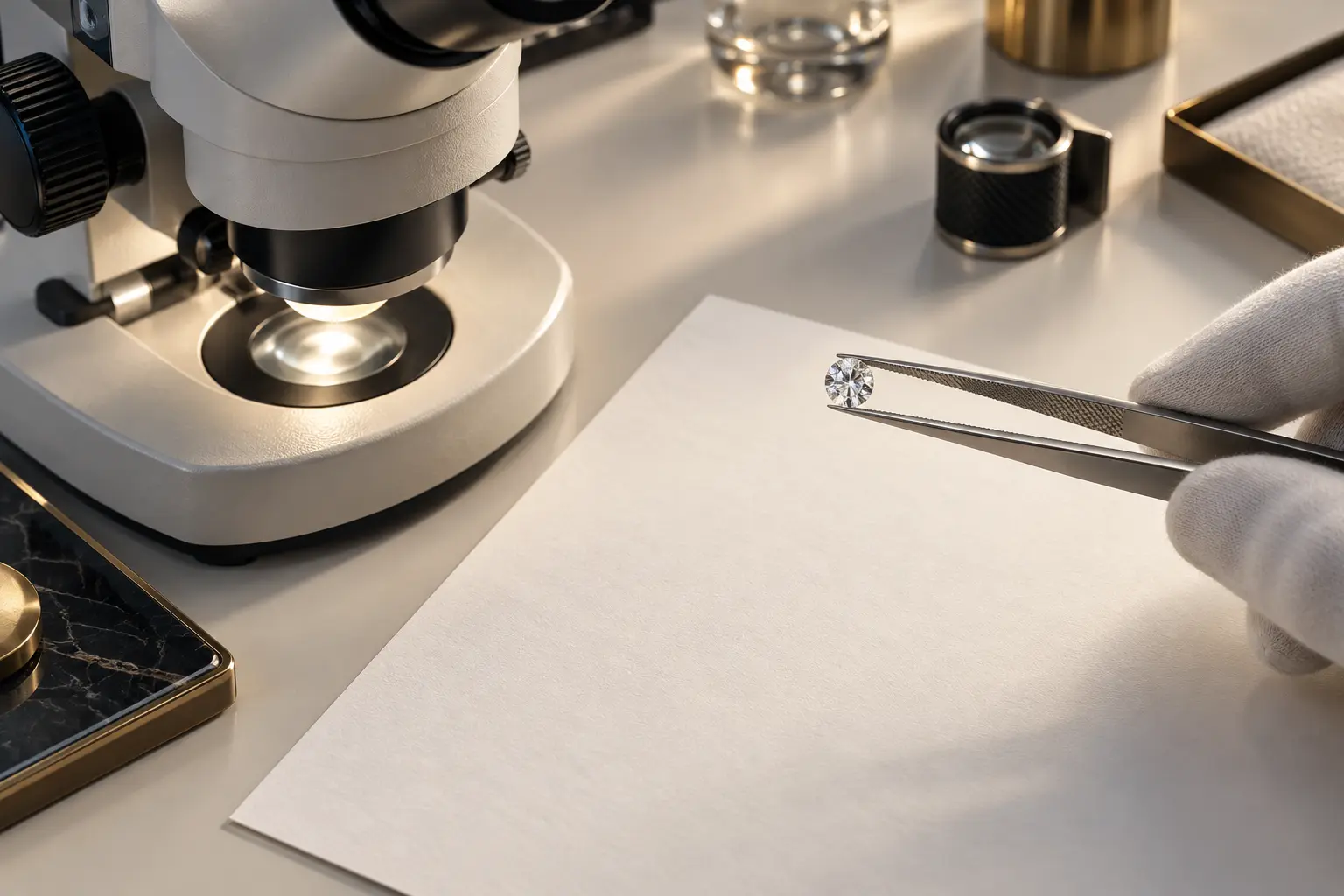
A gemological report is an important source of information about a diamond. Its usefulness depends on understanding what it covers and establishing that the report relates to the stone being considered.
Identify the report and the stone
Read the issuing laboratory, report number, date and identifying details. Where the issuer offers a report-check service, use its official channel. A valid report number is a starting point; the physical stone still needs to correspond to the report.
Understand what the grading describes
Natural-diamond reports can describe characteristics such as weight, colour and clarity, with the precise scope depending on the service and stone. Read comments and additional observations, not only the headline grades. Natural and laboratory-grown diamonds should be clearly distinguished; check the applicable report format.
Keep grading separate from valuation
A gemological grade does not tell you what a buyer will pay at a future date. Transaction price also needs to be considered alongside market access, selling costs and the terms offered by a counterparty. Two stones should not be compared solely by carat weight or a single grade.
Build a complete transaction record
Keep the report alongside the seller’s description, invoice, condition information and any agreed return or resale terms. The report is one part of the record, not a substitute for ownership documentation. This guide does not provide an appraisal or claim that EXAM or a particular diamond is endorsed by GIA.