
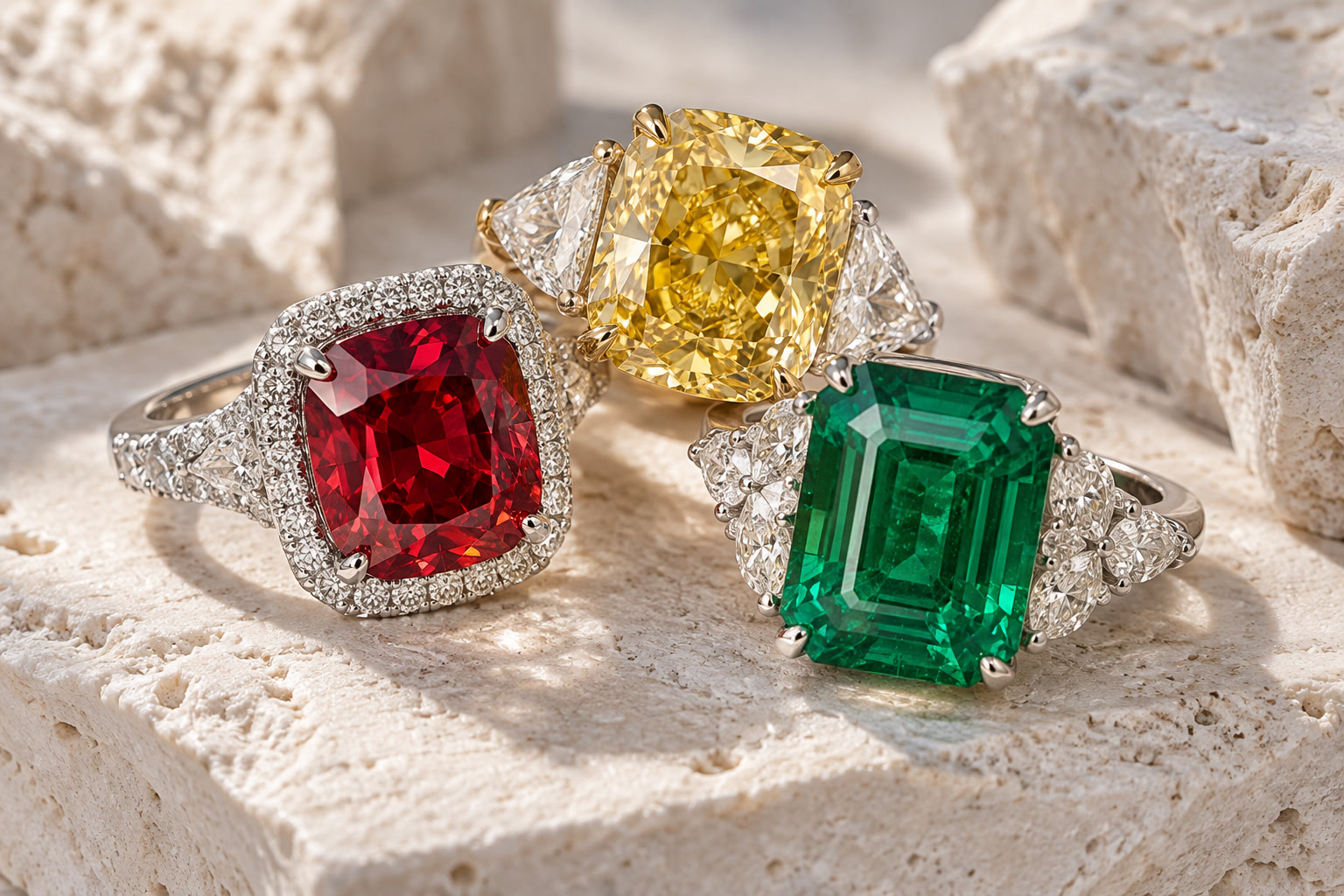
A diamond is not a standardised unit of financial exposure. Its physical characteristics, documentation and market context must be considered together.
Identify the individual stone
Weight, colour, clarity and cut are important quality descriptors, but they are not a complete investment assessment. Identification should also distinguish natural from laboratory-grown material and record relevant treatments. Reports and inscriptions should be checked against the actual stone by appropriately qualified specialists.
GIA’s D-to-Z colour scale is an example of a defined grading system; fancy-colour diamonds are considered outside that scale. Referring to a grading framework does not imply a partnership with the grading organisation or a guaranteed selling price.
Provenance, title and care
A review should establish who owns the piece, what records support its provenance, who has possession and what arrangements apply to storage, transport and insurance. For jewellery, the setting, condition and craftsmanship may introduce considerations beyond the stone itself.
Appraisal is not an exit
Retail, insurance and resale values serve different purposes. The net proceeds of a sale depend on the buyer, market conditions, time available and selling costs. Unlike an actively traded security, an individual stone may take time to sell, and there may be no buyer at the desired price.
The EXAM perspective
EXAM INVESTMENT considers authenticity, quality, provenance and marketability as separate questions. Rarity or beauty does not by itself establish future appreciation. Our business introduction is not an appraisal, a purchase recommendation or a promise to repurchase a piece.