
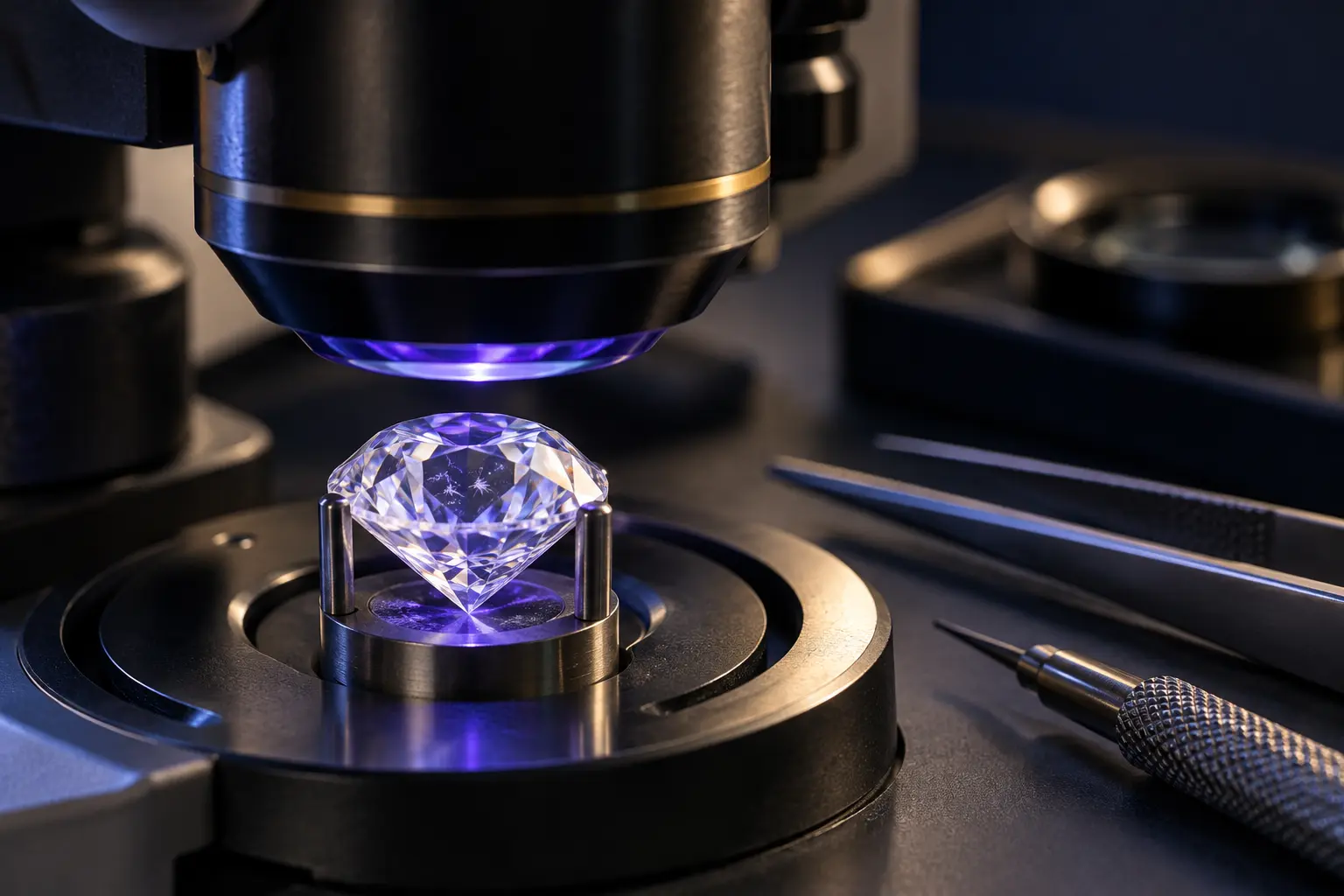
Fluorescence is not the same thing as a treatment or a chip. Each requires a different question and different evidence. A single grade cannot replace inspection of the actual stone under suitable lighting, review of its report and an assessment of its present condition.
Use the right question
Table scrolls horizontally
| Feature | Meaning | Inspection focus |
|---|---|---|
| Fluorescence | Light emitted in response to ultraviolet light | Actual appearance under relevant lighting; not a universal discount |
| Treatment | A process used to change appearance | Disclosure, stability and care requirements |
| Chip or damage | Physical loss or damage to the stone | Location, severity, setting and professional assessment |
Hardness does not mean unbreakable
Diamond resists scratching, but an impact can still chip vulnerable areas. Points, thin girdles and existing damage deserve attention. If a stone is loose in its setting or already damaged, obtain a jeweller’s assessment before continued wear or repair; do not infer that the report’s earlier condition still applies.
Document the stone at handover
- Record report number, identifying details, photographs and condition observations. Agree how a mismatch or newly found damage will be handled before payment or consignment.
- Separate technical observations from price negotiation. Ask how the specific feature affects this buyer’s written offer rather than assume a fixed market-wide percentage.
Further reading
General information only; not investment advice, an offer or a recommendation. Any participation is subject to eligibility, documentation and applicable permissions. Capital and returns are not guaranteed; some or all capital may be lost.