
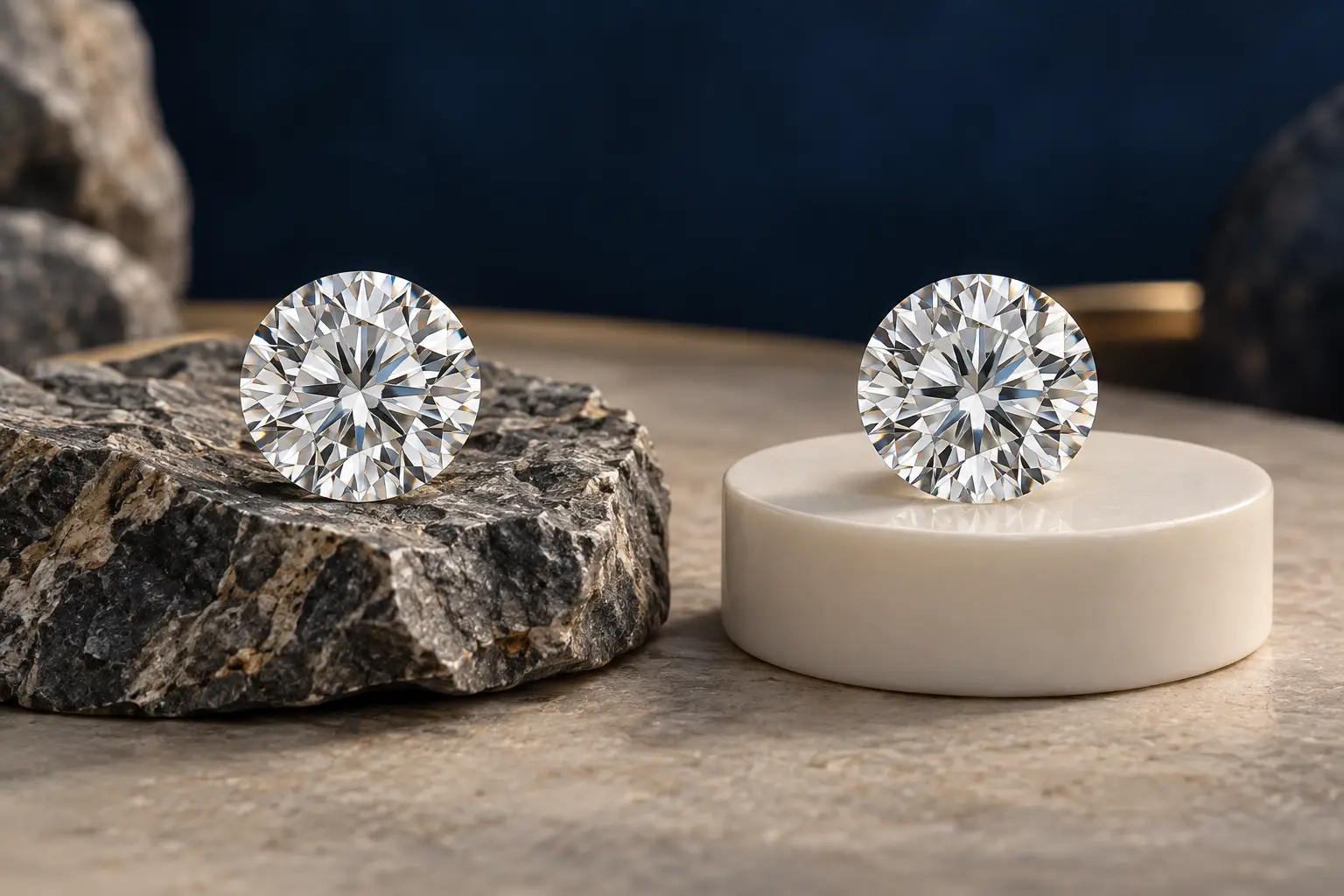
Laboratory-grown diamonds are diamonds, not merely look-alike stones. Natural and laboratory-grown diamonds have essentially the same core chemical and physical properties, but different origins. That is a material identification question. Scarcity, customer preference, production capacity and available buyers are separate market questions.
Separate three categories
Table scrolls horizontally
| Category | What differs | What to verify |
|---|---|---|
| Natural diamond | Geological formation | Origin identification, quality and treatments |
| Laboratory-grown diamond | Manufactured growth, including HPHT or CVD | Disclosure of growth origin and any treatment |
| Diamond simulant | Different material, such as cubic zirconia | Correct material description |
Similar appearance does not establish origin
Specialist instruments and gemological examination may be needed to establish origin. Request an appropriate laboratory report and match the report details to the actual stone. A photograph, a verbal assurance or an inscription alone should not replace the complete identification process.
Compare the purchase purpose
- For use as jewellery, compare appearance, budget and documented identity. For potential resale, obtain actual buyer quotations for the same stone rather than infer a value from retail listings.
- Neither “natural” nor “laboratory-grown” proves a future return or an environmental claim. Environmental comparisons require production-specific evidence and a stated measurement boundary.
Further reading
General information only; not investment advice, an offer or a recommendation. Any participation is subject to eligibility, documentation and applicable permissions. Capital and returns are not guaranteed; some or all capital may be lost.