
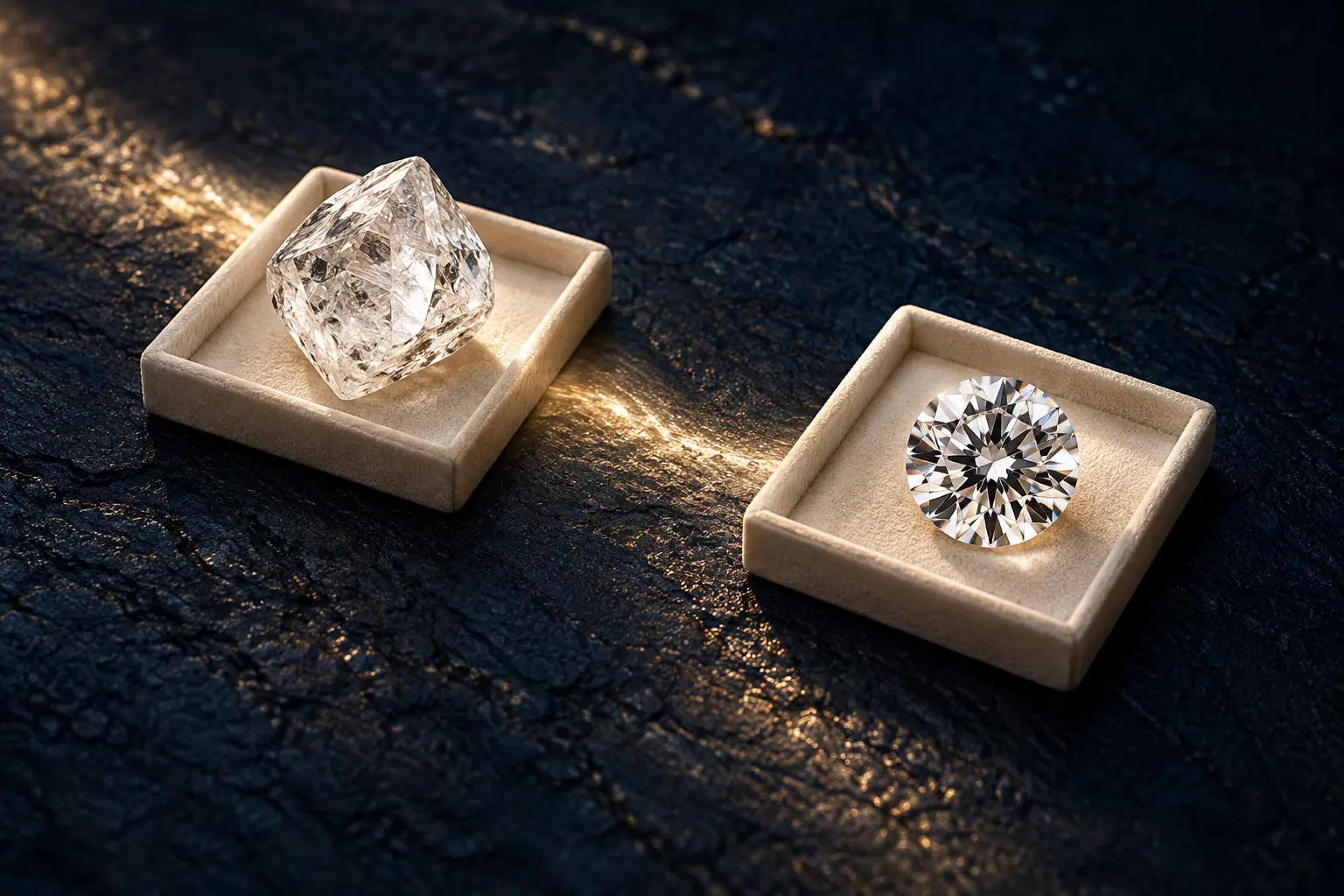
A story about a diamond is more useful when each part is linked to evidence. Ask which facts are established by a laboratory, which are supported by transaction records and which remain unknown.
Do not combine different kinds of evidence
A quality report describes characteristics of a stone. An invoice records a transaction. Neither necessarily establishes every previous owner or the mine from which the stone originated. Specify the question before choosing the document used to answer it.
Read origin claims precisely
GIA offers a distinct Diamond Origin Report service with origin information. Do not assume that every grading report contains that service. Check the exact report type and the issuer’s explanation of its scope rather than treating a general laboratory name as an origin guarantee.
Maintain a consistent record
Keep identifiers, reports, photographs, invoices and agreed conditions together. A later change to the stone or setting may require further review. An unknown part of the history should remain unknown until evidence resolves it; an attractive narrative cannot close the gap.